







Get expert advice on dates, gear and more. For details on how we handle your data see our privacy policy.





Get expert advice on dates, gear and more
• Zero commitment • No obligations

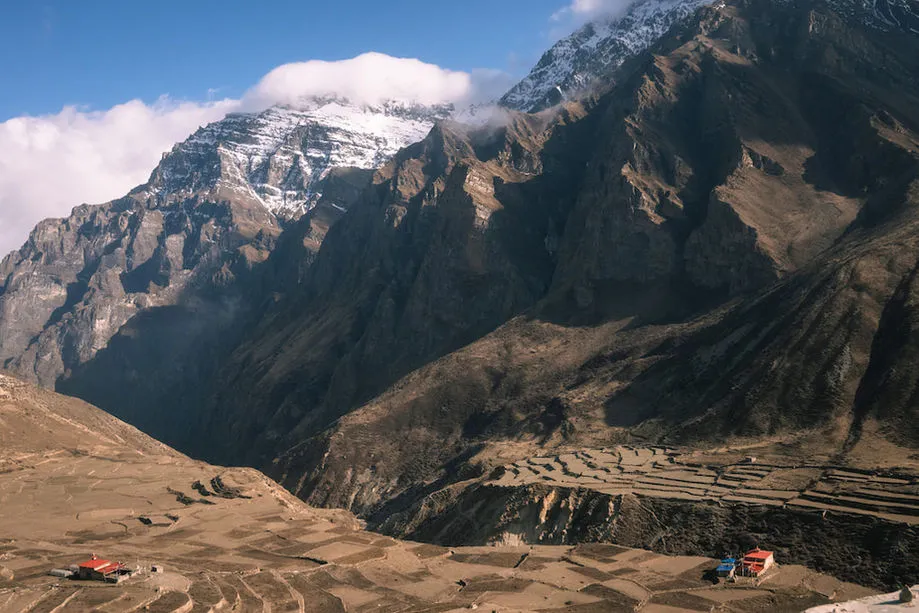
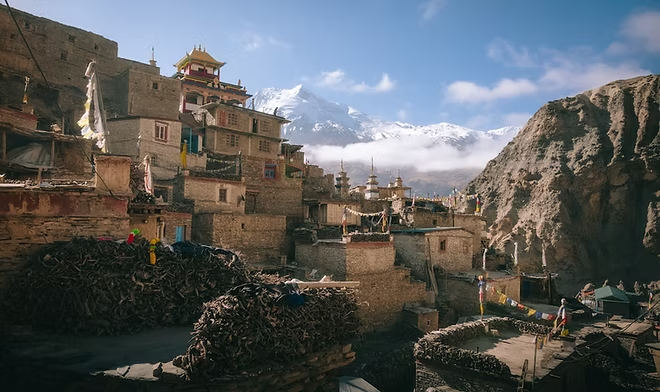
Visit ancient Tibetan-influenced cultures in stone villages far removed from modern life in one of Nepal's most restricted regions.

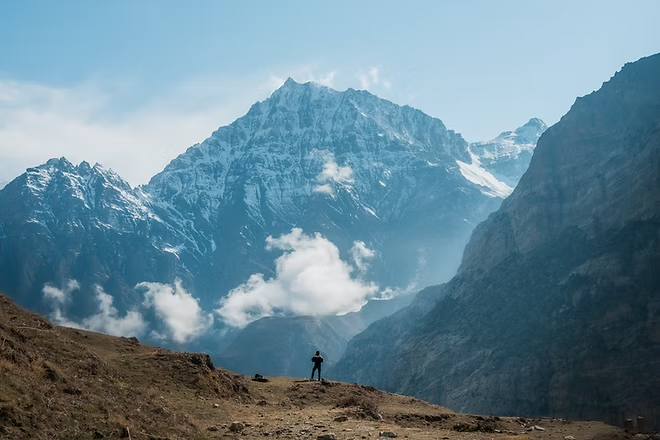
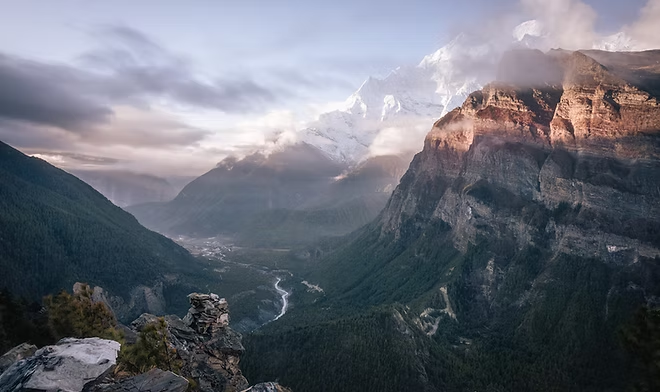
Sweeping views of the Annapurna massif, Himlung Himal, and Tilicho Peak.
Discover the rich history and culture of Nepal and the Mustang region with a certified local adventure guide.
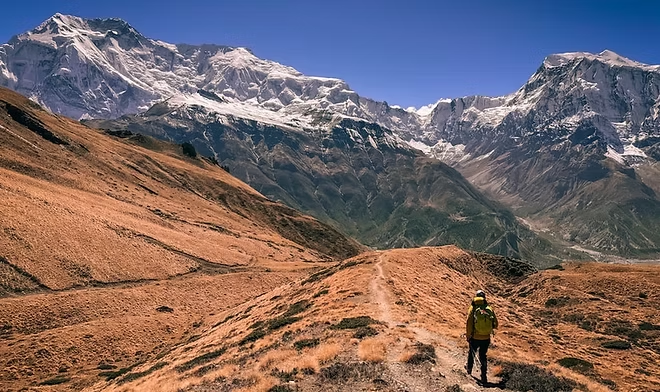
Cross the Kang La Pass (5,320m) for a spectacular panoramic reward. Gain genuine achievement from traversing some of the more demanding conditions the Himalayas can offer.
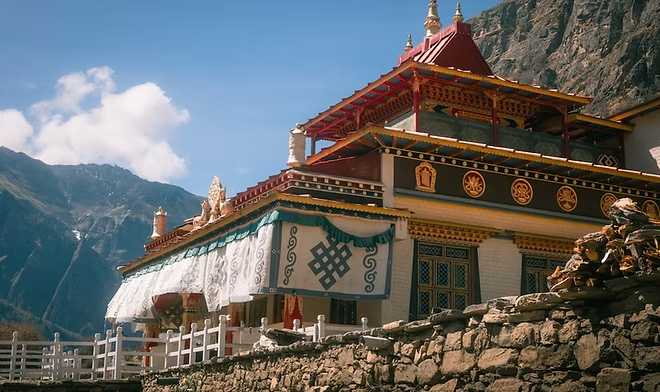
Immerse in a rare blend of spiritual and natural beauty with stays at sacred gompas and remote valleys.

Stay in traditional local tea houses and enjoy authentic local hospitality and delicious local meals.


Hotel

Dinner

Short walks to sites
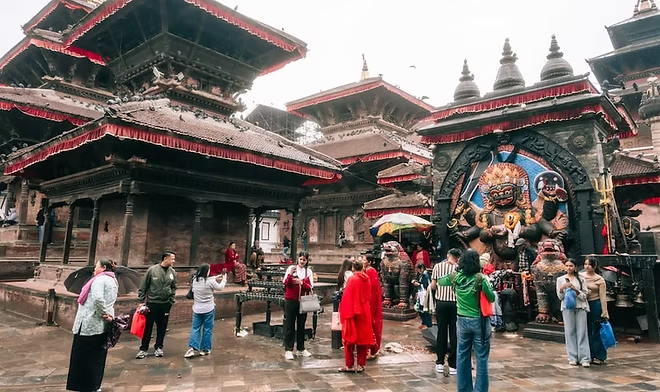
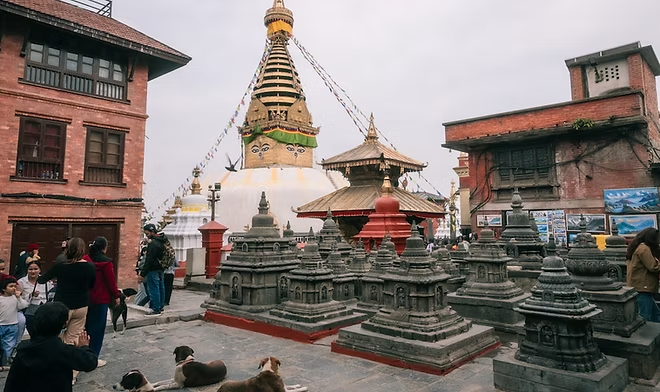
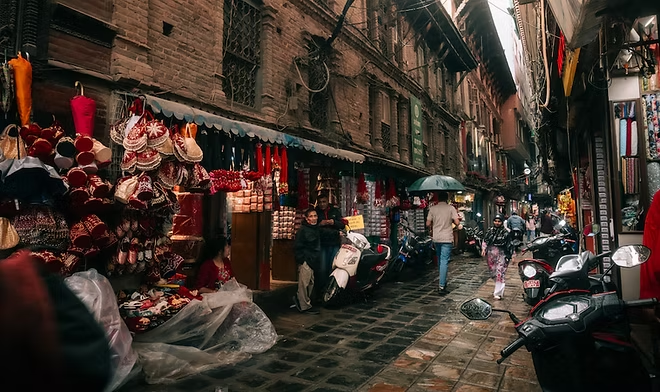
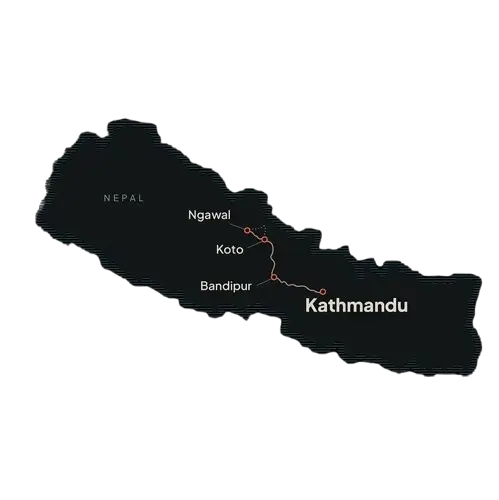
Meet your guide in the afternoon and set out for a short but rich walking tour. Visit the sacred Swayambhunath Stupa, one of the oldest religious sites in Nepal with stunning views over the valley. Wander through Kathmandu Durbar Square before strolling into the buzzing alleys of Asan Bazaar and Thamel. In the evening, meet your group for a welcome dinner and trek briefing.

Local Lodge
Breakfast, Lunch & Dinner

10 Hours
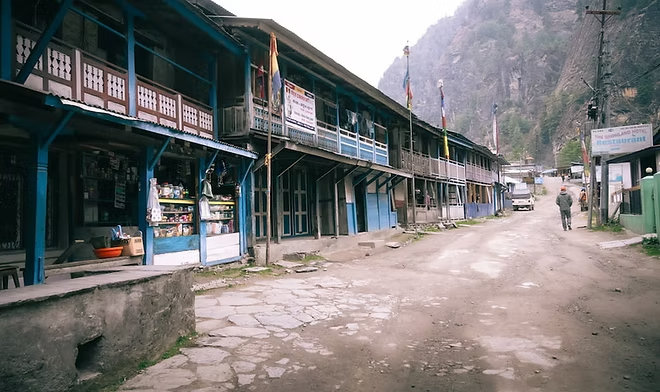
A long but scenic drive takes you deep into the Himalayas, passing terraced fields, waterfalls, and remote mountain roads. After lunch at Besisahar, continue to Koto along the original Annapurna Circuit route. This rustic mountain town marks the edge of the Nar and Phu region.

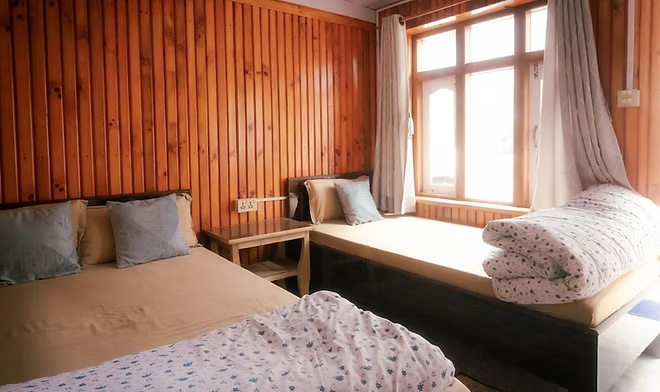

Tea House
Hotel

Dinner

+1410m / -420m
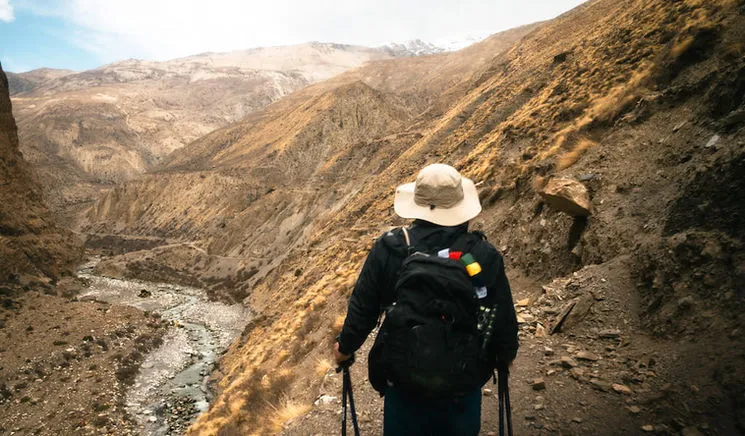
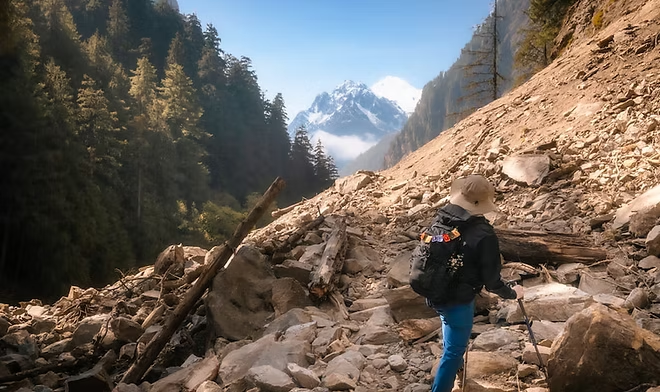
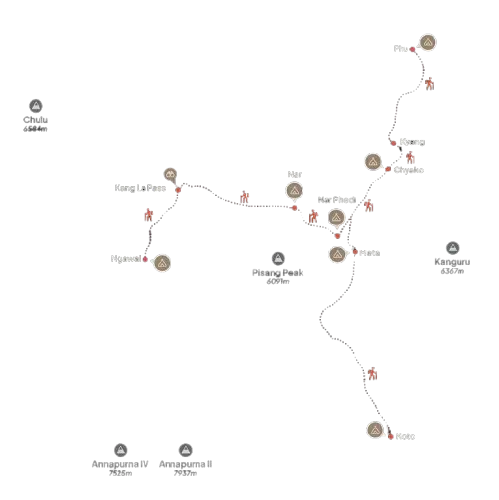
Today the adventure begins in earnest. Cross a suspension bridge and enter the restricted Nar and Phu valleys. The trail follows the river through dense pine forests, cave shelters, and narrow gorges before climbing steeply to the open plains of Meta. Expect expansive views and your first real taste of isolation.


Local Tea House
Breakfast, Lunch & Dinner
8 Km
+300m / -100m
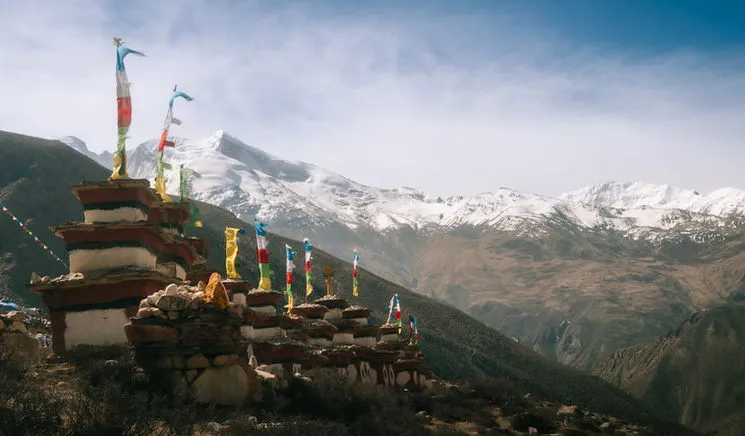
An easier but scenic day. After a golden sunrise over Annapurna II, follow the trail past ancient chortens and rock walls, keeping the Kanguru icefall in view. In Chyako, feel the remoteness and heritage of a village once central to Tibetan Khampa rebels.


Local Tea House
Breakfast, Lunch & Dinner
11 Km
+460 m / -180 m
A short but dramatic day. Trek through a surreal landscape of red cliffs and colorful prayer stones, past the village of Kyang and over suspension bridges, eventually reaching the ancient fortress-like village of Phu. This hidden gem is home to centuries-old monasteries and just 150 residents living traditionally.
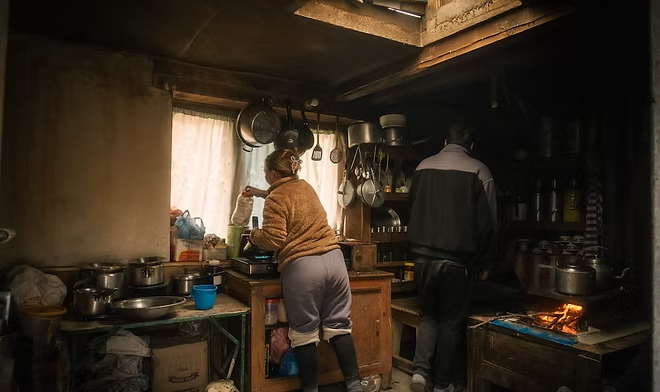


Local Tea House
Breakfast, Lunch & Dinner
Short hikes
Choose your adventure. For a cultural immersion, explore the village and visit the 600-year-old Tashi Lhakhang Gompa. Or opt for a challenging hike to Himlung Himal Base Camp (4,920m) for epic glacier views and high-altitude solitude.
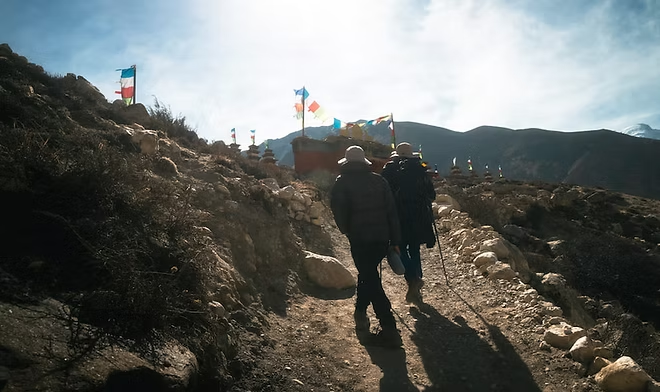
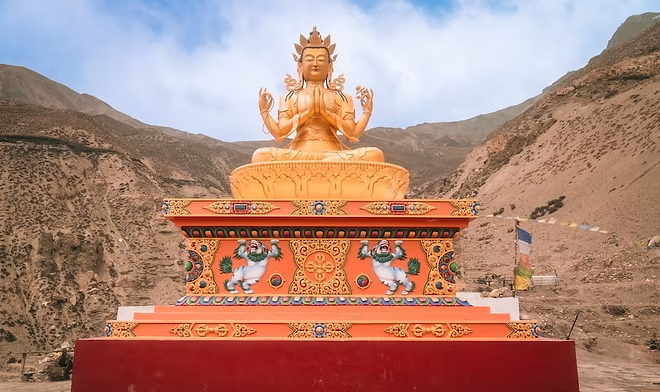
Gompa
Breakfast, Lunch & Dinner
15 Km
+470m / -1000m
Descend through a landscape of stone mani walls, remote caves, and timeless views. Sleep in the monastery at Nar Phedi—a simple but peaceful stay, surrounded by meditating monks and stunning quiet.
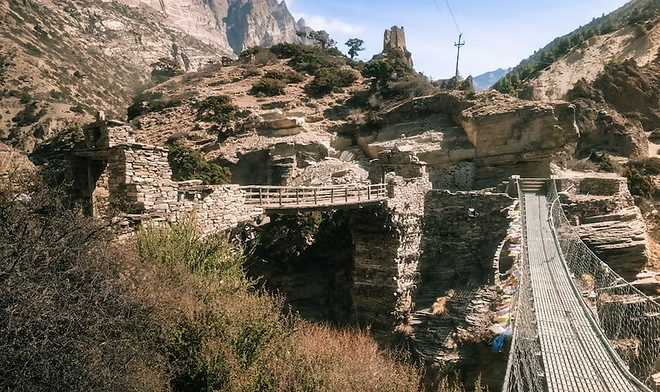

Local Tea House

Breakfast, Lunch & Dinner
8 Km
+750 m / -100 m
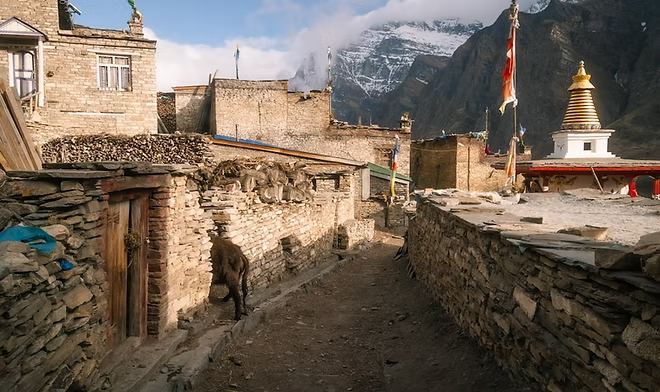
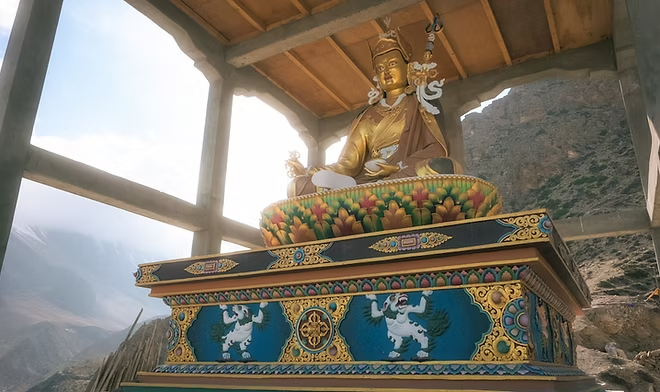
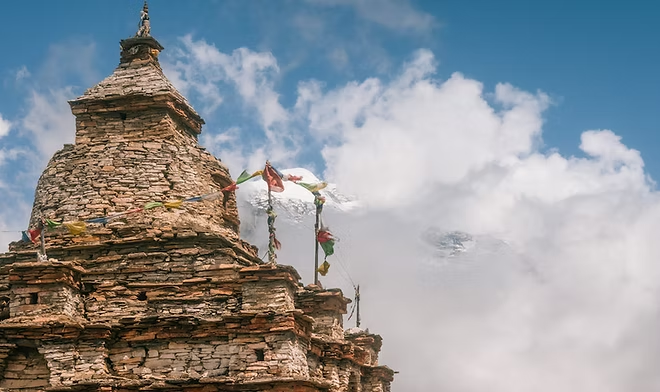
Climb steeply up to Nar Village, the largest and most vibrant settlement in the region. Today’s views are especially dramatic: the Nar Khola gorge, the immense Kanguru peak, and large Tibetan stupas create a deeply spiritual setting.


Local Tea House
Breakfast, Lunch & Dinner
14 Km
+1120m / -1660m
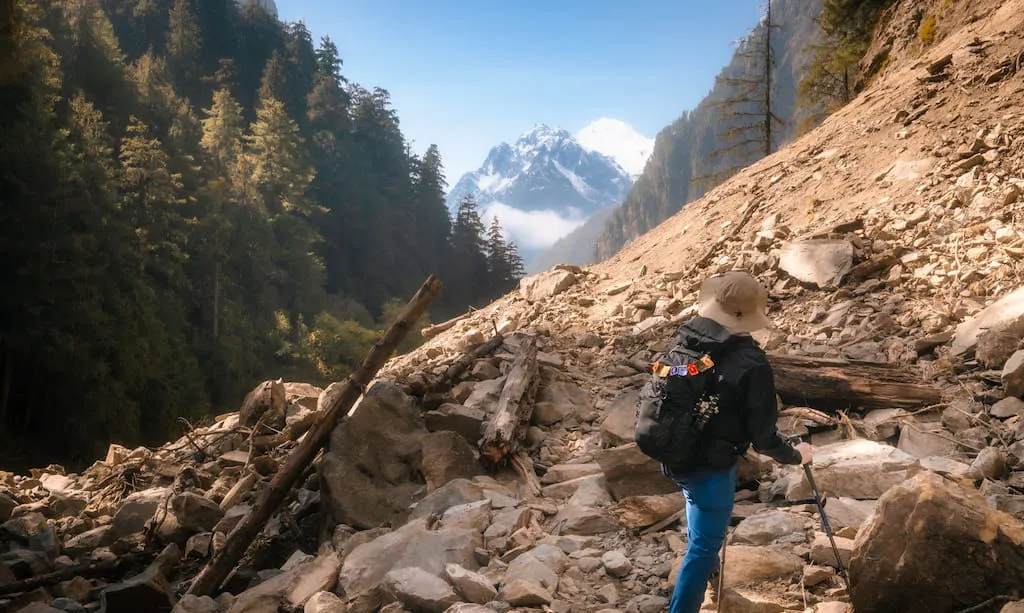
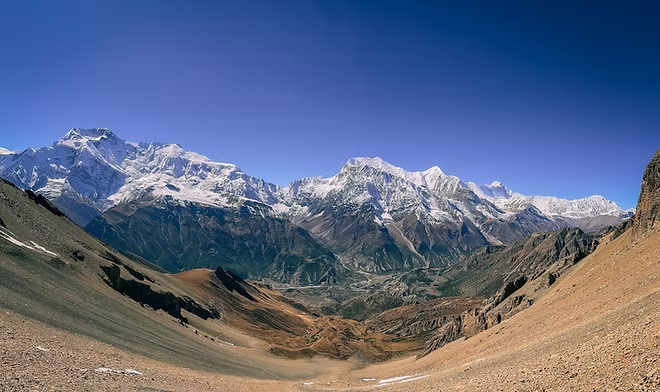
The hardest and most rewarding day of the trek. Begin before sunrise and ascend to the Kang La Pass, where a 360° panorama of Annapurna II, Gangapurna, and Tilicho Peak awaits. After photos and a break, descend steeply on scree trails into lush lower valleys and arrive in Ngawal for a comfortable stay. Ngawal, on the route of the Annapurna Circuit, is certainly very different from the ancient villages just visited. The lodges are big, the menus much more comprehensive and there will be Wifi and phone signals in most lodges.


Village Inn
Breakfast, Lunch & Dinner
6 Hours
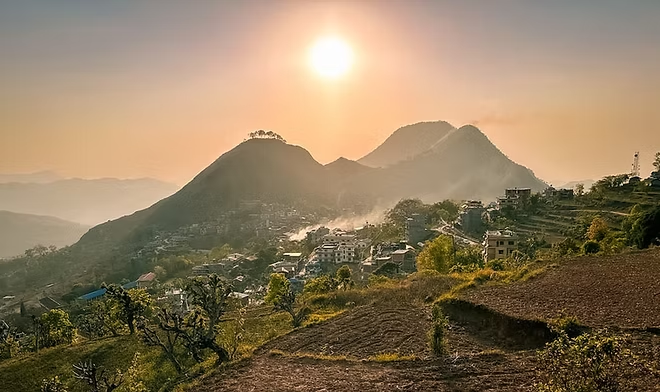
Leave the trail behind as you travel by jeep to Bandipur, a perfectly preserved hill town that feels frozen in time. Explore its car-free streets, restored mansions, and panoramic views over the Himalayas.


Hotel
Breakfast, Lunch & Dinner
6 Hours
Drive back to Kathmandu, unwind at the hotel, and reflect on your incredible Himalayan journey or explore the city on your own.
Hotel
Breakfast
30 minutes
After breakfast, transfer to the airport for your international departure, marking the end of an unforgettable journey.


All your accommodation throughout the trip is fully covered (2 nights in hotels, 2 nights in lodges 6 nights in local tea houses, 1 night in a monastary)

All meals from Day 1 dinner through Day 12 breakfast, featuring local cuisine and dietary accommodations

All internal ground transportation, and airport transfers throughout the journey

Certified local adventure guide throughout the journey

All trekking permits, national park entry fees, and local access charges

You'll have an allowance of 15kg carried for you on camping days. We'll arrange storage and logistics of any extra baggage you may have

All cultural visits included in the itinerary and monastery stays are covered.

International flights to/from Nepal

Personal travel insurance (mandatory) - must include high altitude and trekking coverage

Personal trekking gear like sleeping bags, trekking poles etc.

Tips for guide and support staff

Any activities or meals not specified in the itinerary
The Nar Phu region only opened to trekkers in 2002 and remains one of Nepal's most restricted areas. Here you'll experience authentic Tibetan-influenced culture in villages with fewer than 200 residents, some unchanged for centuries.
The government enforces strict entry regulations, including special permits, mandatory certified guides, and minimum group sizes. It’s not a place you can trek independently or without permission/preparation.
The combination of special permit requirements, challenging logistics, and remote location means only a few hundred trekkers visit each year, making this one of the most exclusive trekking experiences in the Himalayas. This limited access is what preserves the authentic culture and untouched landscapes that make the region so special.
While Everest Base Camp (EBC) reaches 5,364m - slightly higher than Kang La Pass at 5,320m - the Kang La crossing presents a significantly more challenging achievement.
EBC spreads its 2,800m elevation gain over 12 days with multiple acclimatization stops, allowing gradual adaptation to altitude.
In contrast, Kang La Pass demands a massive 1,120m ascent in a single day from Nar village (4,200m), all at very high altitude where oxygen levels are already reduced. This sustained climb requires exceptional endurance and mental fortitude as you push through increasingly thin air without the luxury of staged camps and equipped rest points.
The technical challenge is also greater - EBC follows well-established trails with consistent foot traffic, while Kang La involves navigating loose scree, steep switchbacks, and unmarked terrain. The pass itself is a true mountain crossing, requiring you to commit to the full ascent and descent in one continuous effort.
This makes crossing Kang La Pass a more concentrated test of high-altitude mountaineering ability - a genuine achievement that demonstrates your capacity to perform under some of the more demanding conditions the Himalayas can offer.
The optimal seasons are March-May (spring) and September-November (autumn).
Spring offers clear mountain views and blooming rhododendrons, while autumn provides the most stable weather and crystal-clear visibility.
Winter (December-February) is extremely cold with potential snow blocking high passes, and summer (June-August) brings monsoon rains to lower elevations.
This trek is not suitable for beginners. You should have previous multi-day trekking experience, preferably at altitude. If you're new to high-altitude trekking, we recommend starting with less demanding treks to build experience (see our Pakistan trek)
This is a challenging trek rated 5/5 for physical difficulty. You'll gain 4,500m in elevation and descend 3,450m over the 6 trekking days, with a maximum sleeping altitude of 4,250m. The trek includes steep ascents, high-altitude walking, and crossing the demanding Kang La Pass at 5,320m. No technical climbing skills are required, but excellent fitness is essential.
You should be comfortable hiking 4-8 hours daily at altitude, often on steep, uneven terrain. We recommend at least 3 months of preparation including regular hiking with a loaded backpack, cardio training, and strength exercises focusing on legs and core.
Our team is happy to provide more in-depth guidance for physical preparations and personalized training plans to help you get ready for this adventure. If you have any concerns about the physical demands feel free to contact us to discuss the specific requirements and preparation strategies in more detail.
We do recommend that you consult with your doctor before embarking on any physical activity, especially if you have any pre-existing medical conditions.
At high altitude, the air contains less oxygen, which can affect anyone regardless of fitness level. Common symptoms include headaches, nausea, fatigue, and difficulty sleeping - this is normal as your body adjusts.
Our itinerary is specifically designed with strategic, gradual ascents to maximize acclimatization, including a crucial rest day in Phu village at 4,080m.
Your guide will conduct regular blood oxygen level checks using a pulse oximeter to monitor how well you're adapting to the altitude. We follow strict "climb high, sleep low" principles and will never rush ascent schedules. The trek reaches a maximum sleeping altitude of 4,250m, with the Kang La Pass at 5,320m being the highest point.
Warning signs that require immediate descent include severe headaches, vomiting, confusion, or difficulty walking. Our guides are trained in altitude sickness recognition and carry emergency medication if needed and are trained in emergency evacuation procedures.
Temperatures vary dramatically by altitude and season. Expect warm days and cool nights at lower elevations, while higher altitudes can be freezing even in optimal seasons. Weather can change rapidly in the mountains, so be prepared for all conditions.
Mountain weather is unpredictable. Our experienced guides may adjust the itinerary for safety, including alternative routes or additional rest days. While we aim to complete the full program, flexibility is essential for mountain travel.
At Found Expeditions, your safety is our absolute priority throughout every stage of your adventure. We understand that mountain environments can present unexpected challenges, which is why we've developed comprehensive safety protocols refined through years of experience in the Himalayan region.
Our certified local guides are trained in wilderness first aid, high-altitude safety, and emergency response. We conduct thorough risk assessments for each activity and location, continuously monitoring weather and trail conditions to adjust plans as needed. We maintain direct communication with local authorities and ensure all equipment meets international safety standards.
We require mandatory travel insurance with high-altitude coverage, provide detailed pre-departure safety briefings, and maintain small group sizes (4-12 people) for personalized attention. Our proactive approach to safety management ensures you can focus on creating incredible memories with complete peace of mind.
Yes, comprehensive travel insurance covering high-altitude trekking (up to 6,000m) and emergency evacuation is mandatory. Your policy must cover helicopter rescue from remote areas.
Cancellations require written notification to our offices. Cancellation charges are:
●︎ More than 60 days before departure: Deposit only (30% of the total tour price)
●︎ More than 30 days before departure: 50% of total trip cost
●︎ 30 days or less before departure: 100% of total trip cost
During this Nar Phu Valley adventure, you'll enjoy:
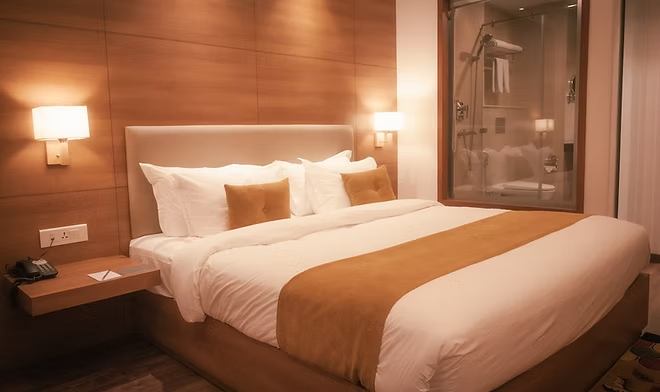
●︎ 2 nights in a Kathmandu Hotel - Comfortable, centrally located with modern amenities
●︎ 1 night in a Bandipur Lodge - Ideally located in the heart of the mountain town
●︎ 2 nights in Lodges at Koto and Ngawal
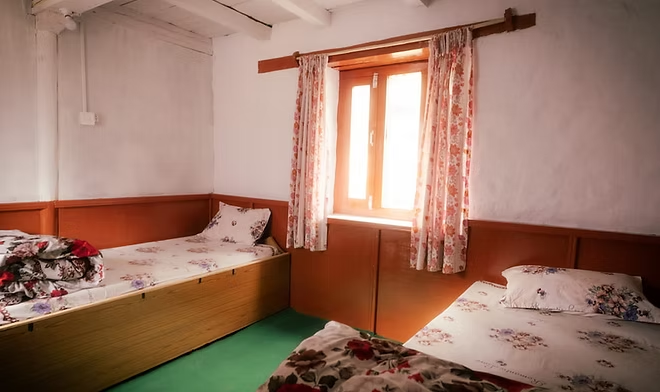
●︎ 6 nights at Teahouses during trekking - Fully supported and locally owned teahouses.
All hotel accommodation is twin-sharing with en-suite facilities.
Solo travelers will be paired with another single client of the same gender, though single accommodations are available for an additional cost during the trek.
Additional hotel nights in Kathmandu can be arranged and single room supplements are available for hotel stays.
Yes, the trip leader will meet all clients arriving on day one at Kathmandu Airport and arrange transfers to the group hotel. Similarly, transfers will be arranged for clients back to Kathmandu Airport on the last day of the holiday.
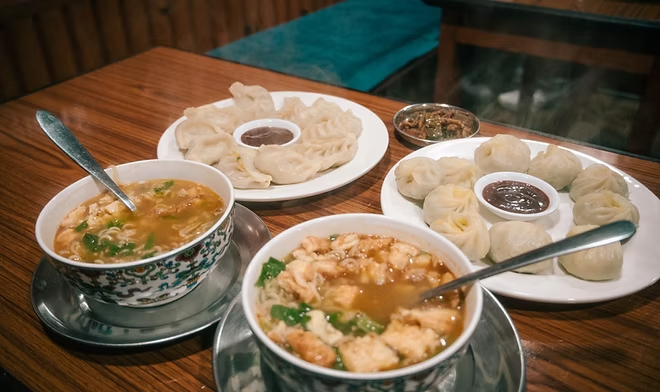
All meals are included (full board). Expect traditional Nepali dal bhat, noodle soups, and simple but hearty mountain food. Vegetarian options are readily available. Special dietary requirements can usually be accommodated - discuss this during your booking consultation.
We encourage fully embracing the local culinary experience, as eating traditional foods is not only more sustainable but also deepens your cultural connection. Clean drinking water is provided and we discourage single-use plastics.
Please read these Terms and Conditions of Booking ('Booking Conditions') carefully before submitting your booking request, as they, along with our Website, Acceptable Use Policy, Privacy & Cookies Policy, and the documents referred to in them, will apply to (A) Your use of our website; (B) Our supply of products and services; and (C) Our contact with you.
Please note that these travel conditions regulate the relationship between you, our customer, and us, Found, for any bookings made through this website and the contractual relationship with us.
YOUR PACKAGE HOLIDAY BOOKING IS WITH FOUND EXPEDITIONS LTD.
1. Our details: Found Expeditions Ltd a company registered in the United Kingdom (company number 15848410) with its Registered Office and main trading address on 7 BELL YARD, LONDON, UNITED KINGDOM, WC2A 2JR
2. In this Contract, the following words and expressions shall bear the meaning hereinafter assigned to them:
a. “The term "Booking/Reservation" refers to any part or all of the travel arrangements made on behalf of the Client with the Suppliers for transportation, lodging, sightseeing, and other related travel and trek services, except services of a supplementary nature.
b. "The Company" refers to Found Expeditions Ltd and/or anybody acting on behalf of or for the Company, provided that such person has been duly authorized and is acting within the scope of his or her responsibilities.
c. "The Client" refers to the individual who applies for the Company's services (directly or indirectly). The aforementioned includes, but is not limited to, a person who applies for his or another person's use or advantage, whether as a principal, agent, or subcontractor. In the Company's Application to conduct Business form, the Client shall include any other person acting on behalf of the Client or whom the Client represents.
d. "The Conditions" refers to these terms and conditions as well as the terms and conditions of the principal, if applicable.
e. "The Traveller/Trekker" refers to any person (whether or not that person is the Client) who uses or benefits from the Company's services. A prospective Traveller must be included in the Traveller.
f. "Travel Agent/Tour Operator/Consultant" refers to any party other than the Company who has made or secured any travel bookings or arrangements for the Client.
g. “The Services” shall mean any travel or other service facility, product, or matter incidental thereto of whatsoever nature arranged or to be arranged by the Company (whether directly or indirectly) to or for the “Client or the Traveller”. The aforesaid shall be used interchangeably and shall include, but not be limited to the providing of advice or information, the booking of reservations for accommodation, transport, or the like (whether by air, land, or otherwise) or any other service or facility provided by the Company for which the Company, in its sole and absolute discretion, deems necessary or ancillary to the services or facilities requested, or anything else associated with or related to travel.
h. “The Principal/Supplier” shall mean the provider of accommodation, transport, and all other relevant services or products arranged by the Company, or any services ancillary thereto provided by the principal or any other party.
3. Your holiday booking
Please note that to book any of the activity tours (‘Tours’) described on our website (‘Site’) you must agree to be bound by these Booking Conditions. A booking will exist as soon as we issue our confirmation invoice. This booking is made on the terms of these booking conditions. When you make a booking you guarantee that you have the authority to accept and do accept on behalf of your party the terms of these booking conditions.
4. Paying for Your Holiday
When you make your booking you must pay a deposit of 30% of the Tour’s total price per person. The balance of the price of your travel arrangements must be paid at least 60 days before your departure date. If the deposit and/or balance is not paid in time, we shall cancel your travel arrangements. If the balance is not paid in time we shall retain your deposit.
Full payment is due at the time of Booking for trips starting 60 days or less from the date of Booking
Final acceptance of any participant is subject to receipt and review of all required forms, documents, and payment.
5. If You Cancel Your Holiday
a. You, or any member of your party, may cancel your travel arrangements at any time. Written notification from the person who made the booking or your travel agent must be received at our offices. Since we incur costs in cancelling your travel arrangements, you will have to pay cancellation charges as follows (see also the exception below):
Note: If the reason for your cancellation is covered under the terms of your insurance policy, you may be able to reclaim these charges.
b. You can cancel your booking without paying cancellation charges if the performance of your package, or the carriage of passengers to your destination, is significantly affected by unavoidable and extraordinary circumstances occurring at your destination. In such circumstances, we will arrange for your booking to be terminated and for you to receive a full refund. We will observe advice provided by the UK Foreign, Commonwealth and Development Office.
6. If You Change Your Booking
If, after our confirmation invoice has been issued, you wish to change your travel arrangements in any way, for example your chosen departure date or accommodation, we will do our utmost to make these changes but it may not always be possible. Any request for changes to be made must be in writing from the person who made the booking or your travel agent. You will be asked to pay any further cost we incur in making this alteration. You should be aware that these costs could increase the closer to the departure date that changes are made and you should contact us as soon as possible. Note: Certain travel arrangements may not be changeable after a reservation has been made and any alteration request could incur a cancellation charge of up to 100% of that part of the arrangements.
You can transfer your booking to another person, who satisfies all the conditions that apply to this booking, by giving us notice in writing as soon as possible and no later than 7 days before departure. Both you and the new traveller are responsible for paying all costs we incur in making the transfer.
7. If We Cancel Your Booking
We reserve the right to cancel your booking. We will not cancel less than 60 days before your departure date, except for unavoidable and extraordinary circumstances, or failure by you to pay the final balance, or because the minimum number required for the package to go ahead hasn’t been reached. Unavoidable and extraordinary circumstances means a situation beyond our control, the consequences of which could not have been avoided even if all reasonable measures had been taken. The minimum number required will be provided to you with the holiday description, along with the time limit for us to tell you if the package has to be cancelled.
If your holiday is cancelled you can either have a refund of all monies paid or accept an alternative holiday of comparable standard from us if we offer one (we will refund any price difference if the alternative is of a lower value).
In the event a refund is paid to you, we will provide a full refund of your travel insurance premiums if you paid them to us and can show that you are unable to transfer or reuse your policy.
This does not exclude you from claiming more if you are entitled to do so.
Flights should not be booked until written confirmation is provided. This ensures the tour meets the minimum group size requirements, particularly for solo travelers. Additionally, a Single Supplement may apply if a suitable travel companion for sharing cannot be arranged.
8. If We Change Your Booking
a. Changes to the price
We can change your holiday price after you’ve booked, only in certain circumstances:
Should the price of your holiday go down due to the cost changes mentioned above, then any refund due will be paid to you. We will deduct from this refund our administrative expenses incurred. Please note that travel arrangements are not always purchased in local currency and some apparent changes have no impact on the price of your travel due to contractual and other protection in place.
b. Changes other than the price
It is a term of your booking that we are able to make changes to any aspect of your booking. If the change is insignificant, we will ensure that you are notified about it. Examples of insignificant changes include alteration of your outward/return flights by less than 12 hours, changes to aircraft type, change of accommodation to another of the same or higher standard, changes of carriers.
If we are constrained by circumstances beyond our control to alter significantly any of the main characteristics of the travel services that make up your package you will have the rights set out below.
The compensation that we offer does not exclude you from claiming more if you are entitled to do so.
9. Authority on tour
Our trips are generally run by group leaders, local representatives, crews or skippers (Leaders). The decision of the Leader is final on all matters likely to affect the safety or well-being of any traveller or staff member participating in the trip. If you fail to comply with a decision made by a Leader, interfere with the well-being of the group or our ability to run a trip as planned, the Leader may direct you to leave the trip immediately, with no right of refund. You must at all times comply with the laws, customs, foreign exchange and drug regulations of all countries visited, and you also agree to travel in accordance with our guidelines.
During our trips, you may be visiting local communities. We are committed to observing learning, and minimizing impact and disturbance while visiting these communities. You must follow the instructions of the Leader at all times, especially when interacting with children.
During our trips, you may be in contact with local wildlife. Found is committed to respecting and protecting the environment and the wildlife in it. By participating in our trips, you accept our policy in relation to wildlife interaction, as described herein:
10. Our Liability to You
You must inform us without undue delay of any failure to perform or improper performance of the travel services included in this package. If any of the travel services included in your package are not performed in accordance with the contract, or are improperly performed, by us or the travel service suppliers, and this has affected the enjoyment of your travel arrangements, you may be entitled to an appropriate price reduction or compensation or both. We will not be liable where any failure to perform or improper performance of the travel services is due to: you or another member of your party; or a third party unconnected with the provision of the travel services in the package and is unforeseeable or unavoidable; or unavoidable and extraordinary circumstances, which means a situation beyond our control, the consequences of which could not have been avoided even if all reasonable measures had been taken.
Our liability, except in cases involving death, injury or illness, shall be limited to a maximum of three times the cost of your travel arrangements. Our liability will also be limited in accordance with and/or in an identical manner to
a) The contractual terms of the companies that provide the travel services that make up your package. These terms are incorporated into this booking; and
b) Any relevant international convention, for example the Montreal Convention in respect of travel by air, the Athens Convention in respect of travel by sea, the Berne Convention in respect of travel by rail and the Paris Convention in respect of the provision of accommodation, which limit the amount of and conditions under which compensation can be claimed for death, injury, delay to passengers and loss, damage and delay to luggage. We are to be regarded as having all benefit of any limitation of the extent of or the conditions under which compensation is to be paid under these or any conventions.
You can ask for copies of the travel service contractual terms, or the international conventions, from info@foundexpeditions.com. Under passenger rights law you have rights in some circumstances to refunds and/or compensation from your airline in cases of denied boarding, cancellation or delay to flights.
Full details will be publicised at relevant airports and available from airlines. However, reimbursement in such cases will not automatically entitle you to a refund of your holiday cost from us. Your right to a refund and/or compensation from us is set out in these booking conditions. If any payments to you are due from us, any payment made to you by the airline or any other service provider will be deducted.
If it is impossible to ensure your return as scheduled due to unavoidable and extraordinary circumstances, we will bear the cost of necessary accommodation, if possible of equivalent category, for a maximum of three nights. The limit doesn’t apply to persons with reduced mobility and any person accompanying them, pregnant women and unaccompanied minors, or persons in need of specific medical assistance, provided that you notified us of these needs at least 48 hours before the start of your holiday.
NB this entire clause 8 does not apply to any separate contracts that you may enter into for excursions or activities whilst on holiday.
You agree and acknowledge that should emergency medical services become necessary, the expenses will be your sole responsibility and not that of Found, its owners, officers, agents, employees and associates. You accept full responsibility for determining your medical, physical or other qualifications or suitability for participating in the activity to be booked. You also certify that you are physically and mentally capable of participating in these activities.
11. Other Conditions
a. We require all of our guests to make travel insurance. It will help you during your travel period. Your travel insurance must provide cover against personal accident, death, medical expenses and emergency repatriation with a recommended minimum coverage of GBP50,000 for each of the categories of cover. You must provide your travel insurance policy number and the insurance company's 24-hour emergency contact number on the first day of your trip; you will not be able to join the trip without these details.
b. It is your responsibility to obtain information and to have in your possession all the required documentation and identification required for entry, departure and travel to each country or region you visit on your trip. You agree that you are responsible for the full amount of any loss or expense incurred by us that is a direct result of your failure to secure or be in possession of proper travel documentation.
c. You accept that any assistance, recommendations or advice given by your group leader or local representative in arranging optional activities (including before or after a trip) does not render us liable for them in any way.
d. The company won’t be liable for illegal activities and other serious concerns other than stated in our contract.
e. All the requests relevant to the travel procedure must be in writing.
12. Severability
In the event that any term or condition contained in these Booking Conditions is unenforceable or void by operation of law or as being against public policy or for any other reason then such term or condition shall be deemed to be severed from this contract or amended accordingly only to such extent necessary to allow all remaining terms and conditions to survive and continue as binding.
13. Protecting your money
If you reside in the UK, we provide financial protection for our package holidays by way of a bond held by ABTA – The Travel Association, 30 Park Street, London, SE1 9EQ, www.abta.com. You agree to accept that in the event of our insolvency ABTA may arrange for the services you have bought to continue, or for a suitable alternative to be provided at the same cost as your original booking. You also agree to accept that in circumstances where the travel service supplier provides the services you have bought, you agree to pay any outstanding sum under your contract with us to that alternative travel service provider. However, you also agree that in some cases the services will not be provided, in which case you will be entitled to make a claim under ABTA’s Scheme of Protection (or your payment card issuer where applicable) for a refund of the monies you have paid.
14. ABTA
We are a Member of ABTA, membership number Y6855. We are obliged to maintain a high standard of service to you by ABTA’s Code of Conduct. If you reside in the UK, we can also offer you ABTA’s scheme for the resolution of disputes which is approved by the Chartered Trading Standards Institute. If we can’t resolve your complaint, go to www.abta.com to use ABTA’s simple procedure. Further information on the Code and ABTA’s assistance in resolving disputes can be found on www.abta.com.
15. Complaints
If you have a complaint about any of the services included in your holiday, you must inform Hina Umer, 7 BELL YARD, LONDON, UNITED KINGDOM, WC2A 2JR, +44 7440 451244, info@ foundexpeditions.com without undue delay who will endeavour to put things right.
If it is not resolved locally, please follow this up as soon as possible after your return home, ideally within 28 days by writing to our Customer Services Department at info@foundexpeditions.com giving your booking reference and all other relevant information. Please keep your letter concise and to the point. If you fail to follow the requirement to report your complaint in resort we will have been deprived of the opportunity to investigate and rectify it and this may affect your rights under this booking. Please also see clause above on ABTA.
16. Additional Assistance
If you’re in difficulty whilst on holiday and ask us to help we will provide appropriate assistance, in particular by providing information on health services, local authorities and consular assistance; and helping you to find alternative arrangements and any necessary phone calls/emails. You must pay any costs we incur, if the difficulty is your fault.
17. Passport, Visa and Immigration Requirements
Your specific passport and visa requirements, and other immigration requirements are your responsibility and you should confirm these with the relevant Embassies and/or Consulates. We do not accept any responsibility if you cannot travel because you have not complied with any passport, visa or immigration requirements.
We also advise you to monitor the travel advice issued by the Foreign, Commonwealth & Development Office, before and during your trip, by visiting www.gov.uk/foreign-travel-advice.
18. Excursions
For any excursion or other tour that you book, your contract will be with the operator of the excursion or tour and not with us. We are not responsible for the provision of the excursion or tour or for anything that happens during the course of its provision by the operator.
19. Travel Agents
All monies you pay to the travel agent are held by him on our behalf at all times.
20. Law and Jurisdiction
This booking is governed by English Law, and the jurisdiction of the English Courts. You may however choose the law and jurisdiction of Scotland or Northern Ireland if you live there and wish to do so.

